Wisecrop

Scattered farm tools rebuilt into one operating system

Modular Architecture

Product UX

Farm operations run on scattered tools and gut instinct, and Wisecrop is changing that. This agtech company is developing the Agricultural Operating System for ambitious farm operations across weather, irrigation, nutrition, and field management. Getting those tools to behave as one system demands consistency agriculture rarely achieves.

1

Replace scattered tools with one platform farmers trust

2

Reach every crop type, farm size, and growing region

3

Expand the platform without slowing down or rebuilding

Weather prediction

Knowing the field before conditions change

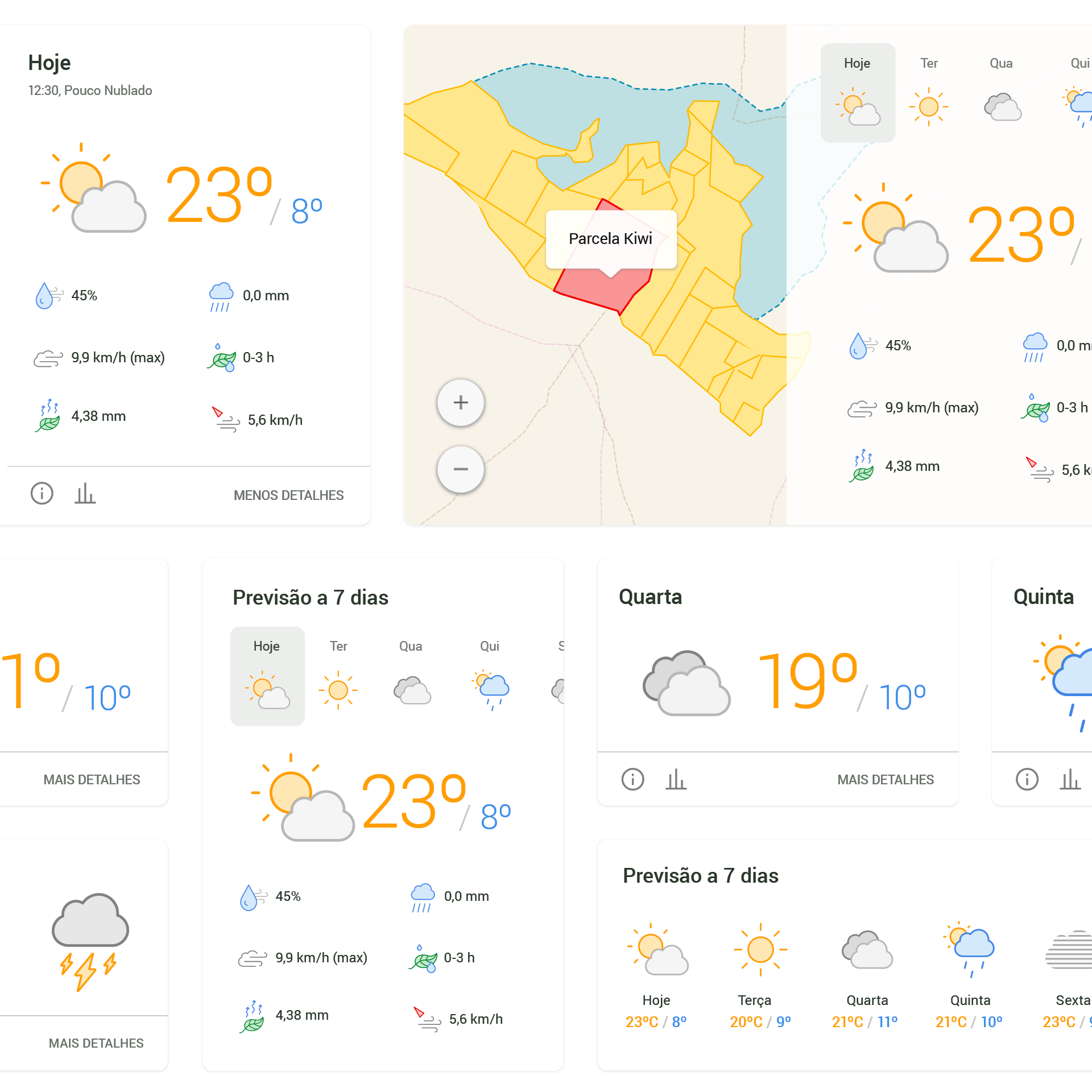
Weather patterns determine planting windows, spray schedules, and harvest timing, but regional forecasts miss field-level variations. AI forecasting combined with on-site sensors delivers parcel-specific predictions. Visualization components built here established reusable patterns across the platform.

Product Engineering

Wisecrop

Weather app interface showing current conditions, weekly forecast, and "Parcela Kiwi."
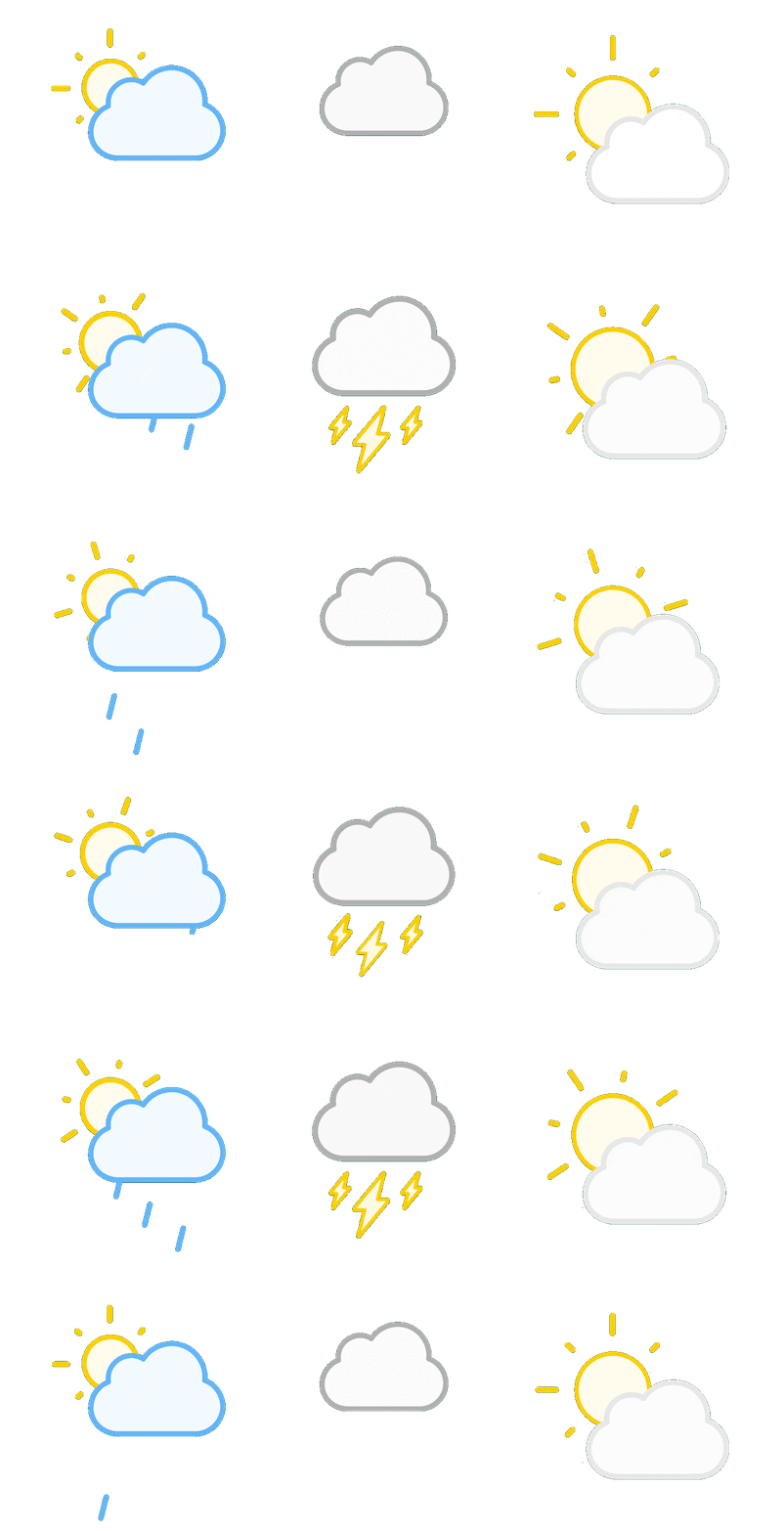
Three weather icons: sun behind cloud, single cloud, and sun partially obscured by cloud.
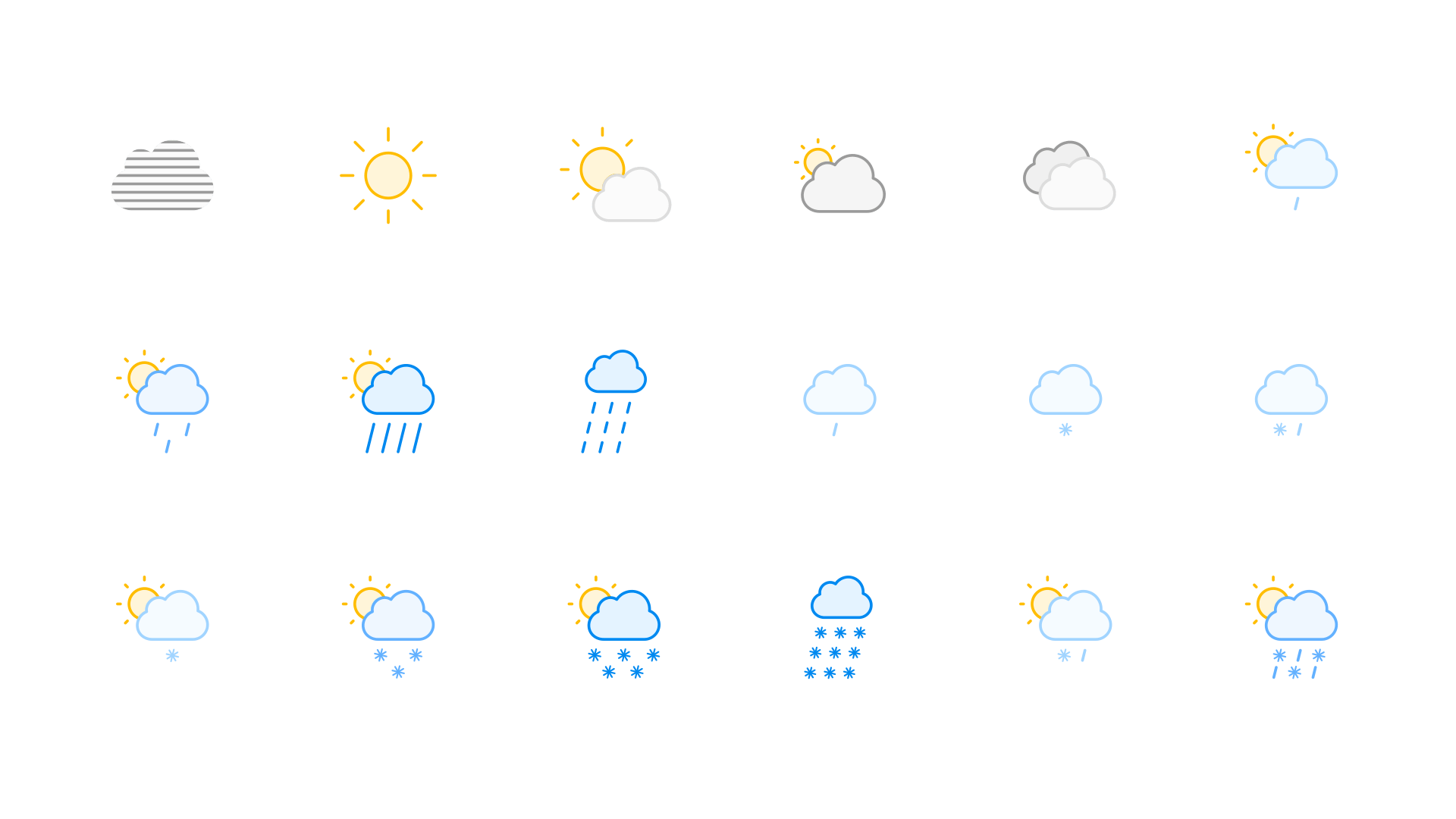
Icons depicting weather conditions: sunny, cloudy, rainy, and snowy, in a grid format.
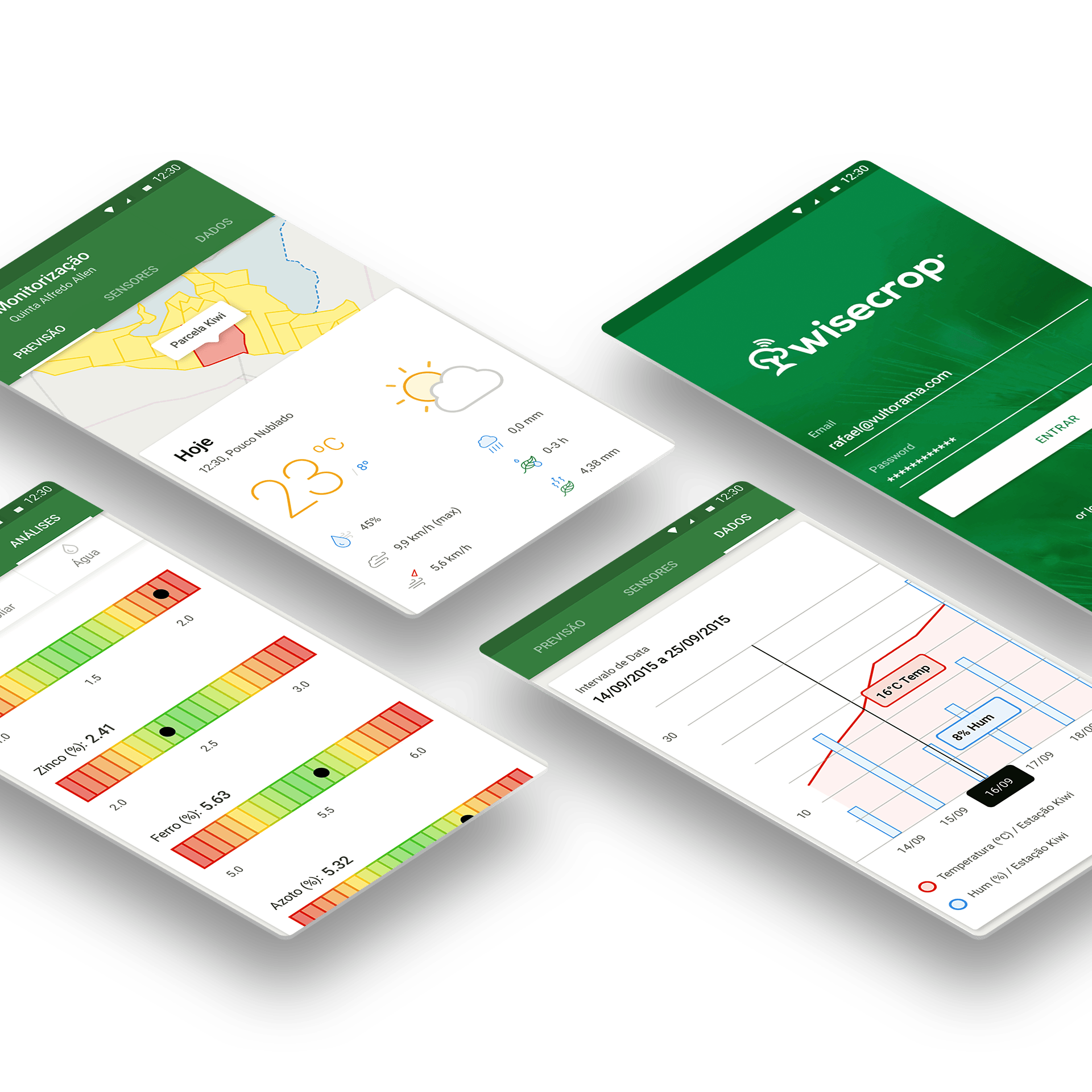
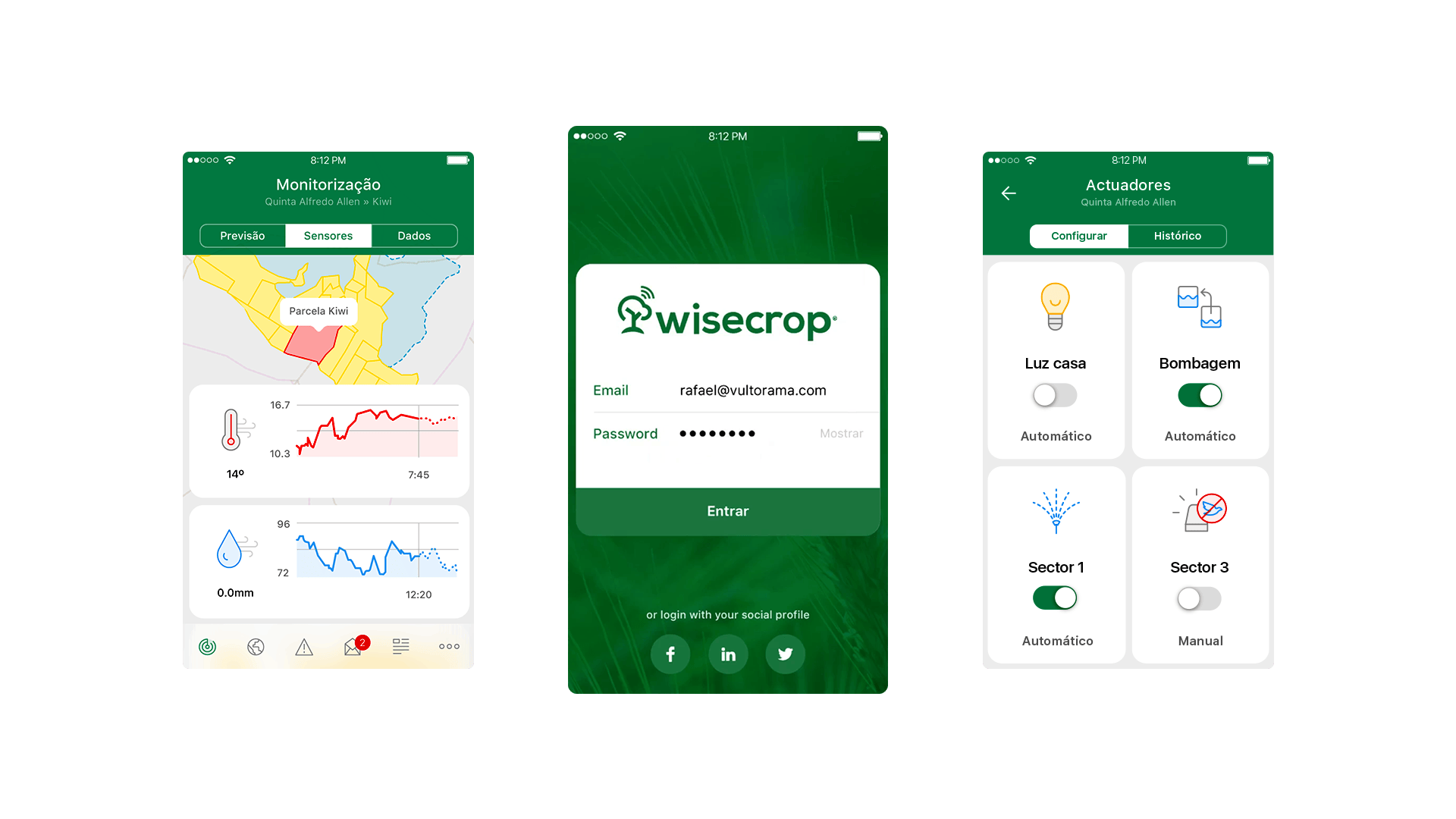
Four smartphone screens showing the WiseCrop app with weather data, maps, and graphs.
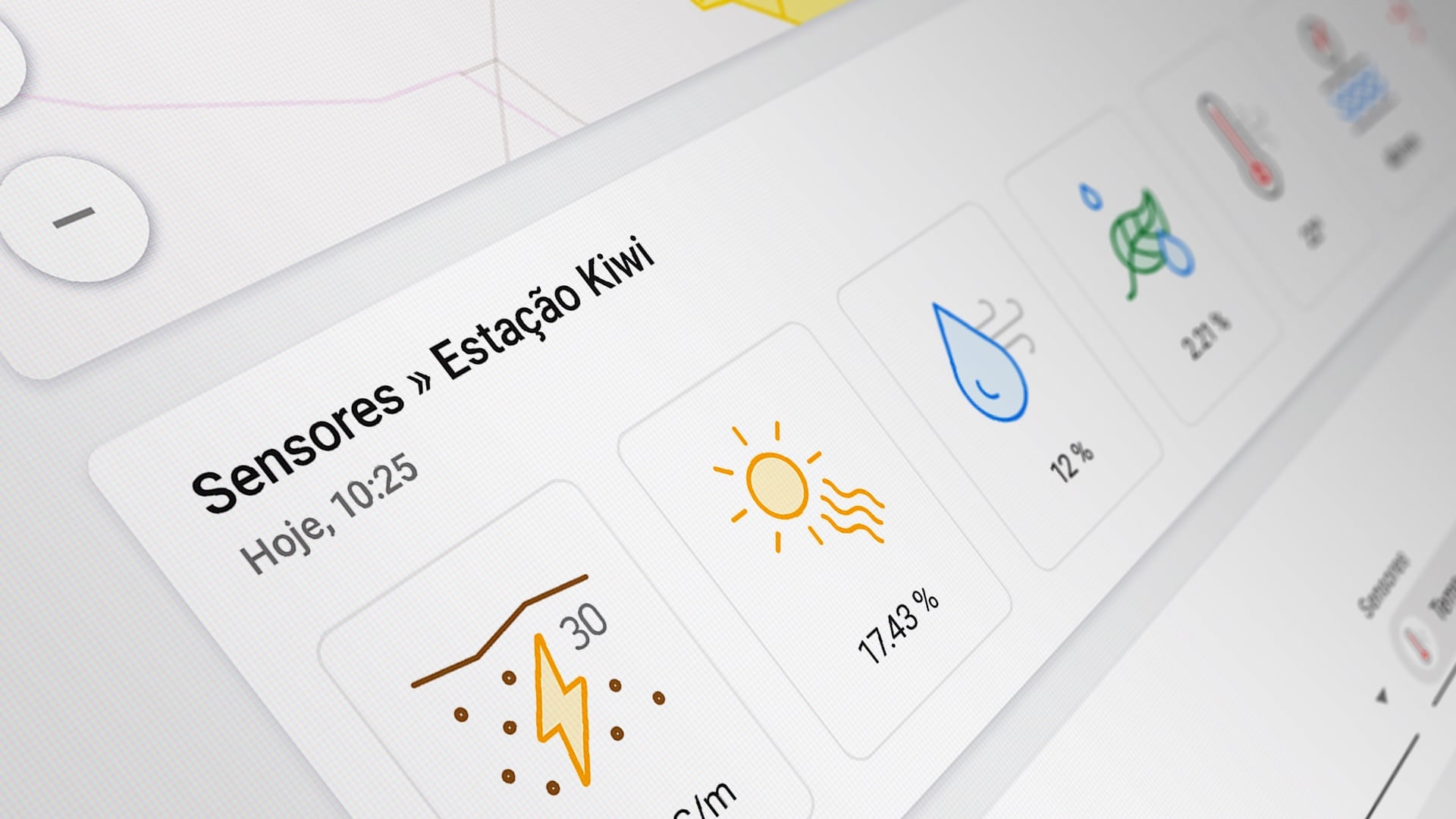
Close-up of a weather station interface showing temperature, humidity, sunlight, and rain.
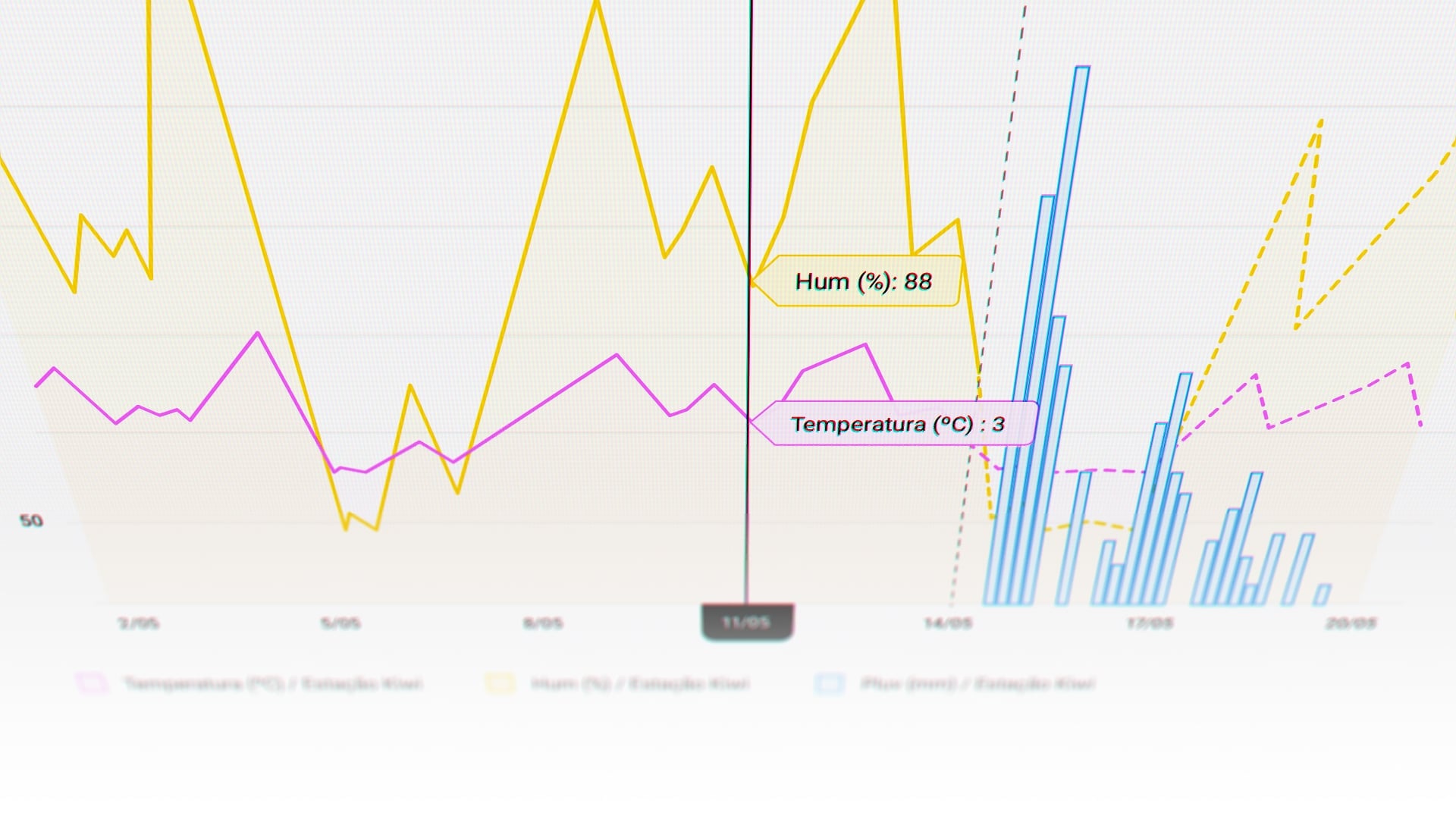
A graph showing humidity in yellow, temperature in magenta, and precipitation in blue.

Monitoring and control

Controlling the farm without leaving the phone

Manual irrigation requires field walks to adjust valves and check conditions. Sensors connect to mobile controls, letting farmers adjust irrigation, activate equipment, and automate lighting. Control components developed here became the shared interaction pattern across every hardware feature.

Mobile Engineering

Waterdog
Mobile app interface with heart logo, products for sale, and CPR course offerings.
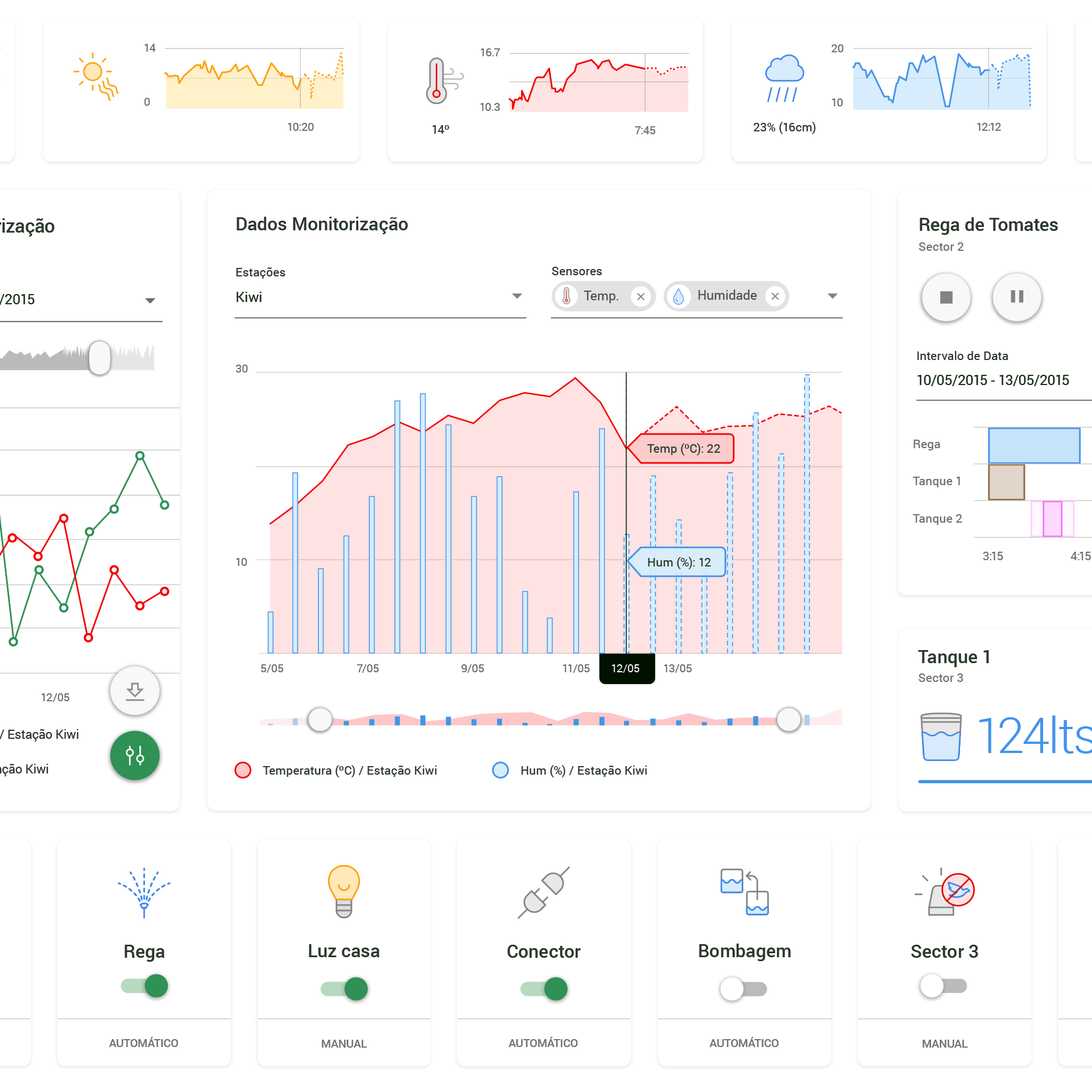
Dashboard displaying environmental data, including temperature, humidity, and irrigation controls.
Illustration showing wind, solar panels, and a water turbine generating clean energy.
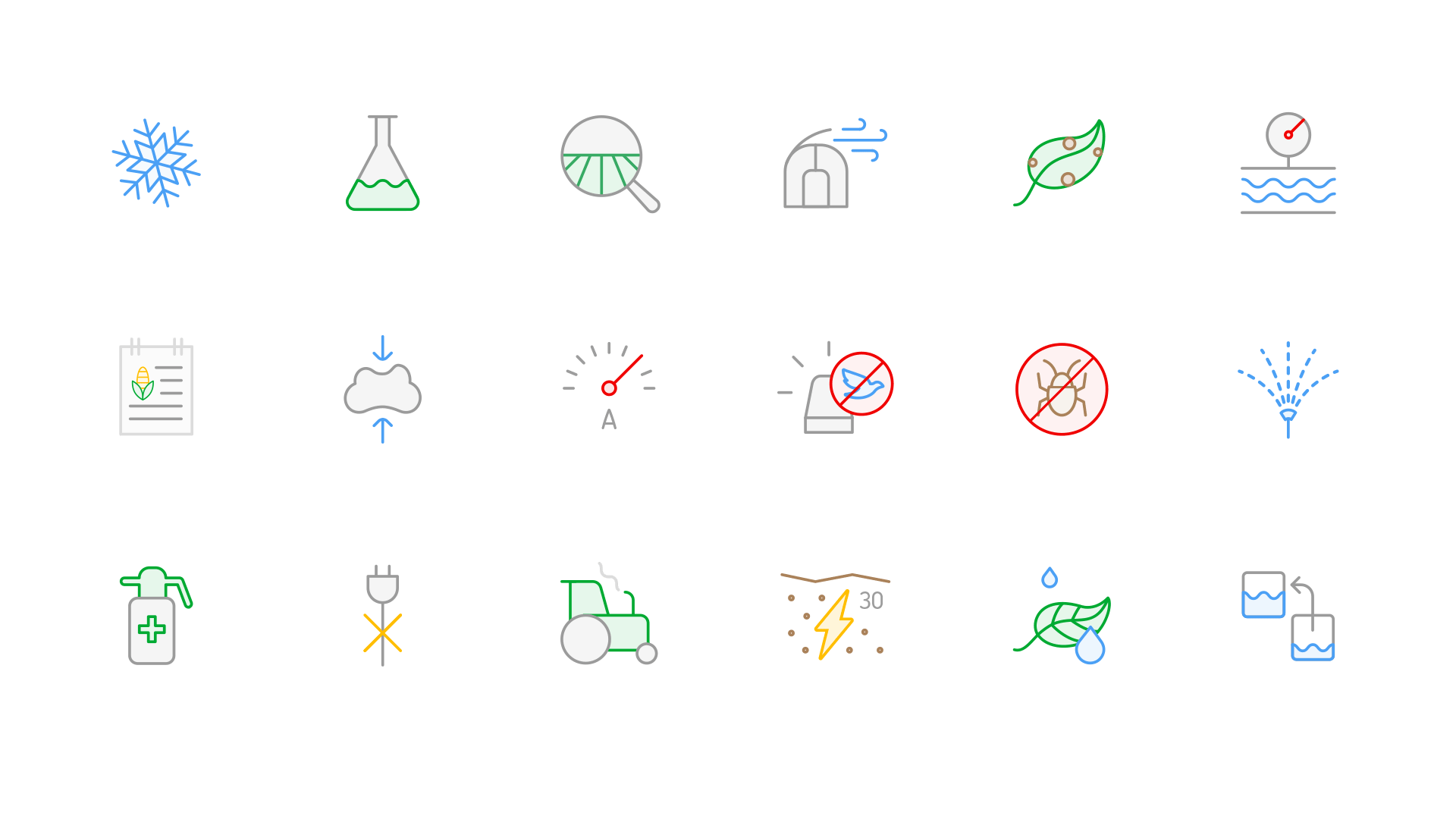
Icons depicting monitoring actions and sensors.
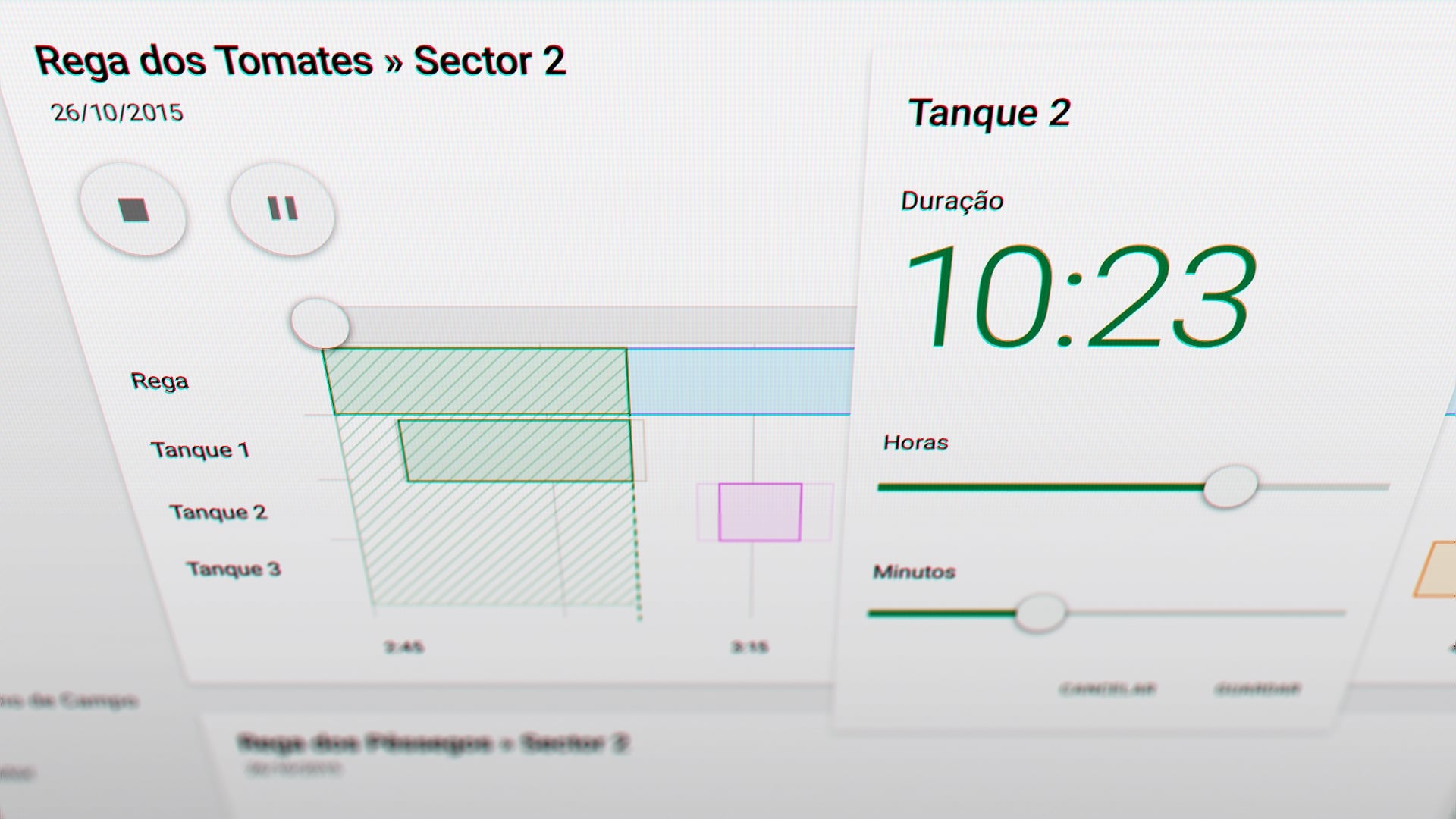
Watering schedule interface for tomatoes with timers, sectors, and duration options.
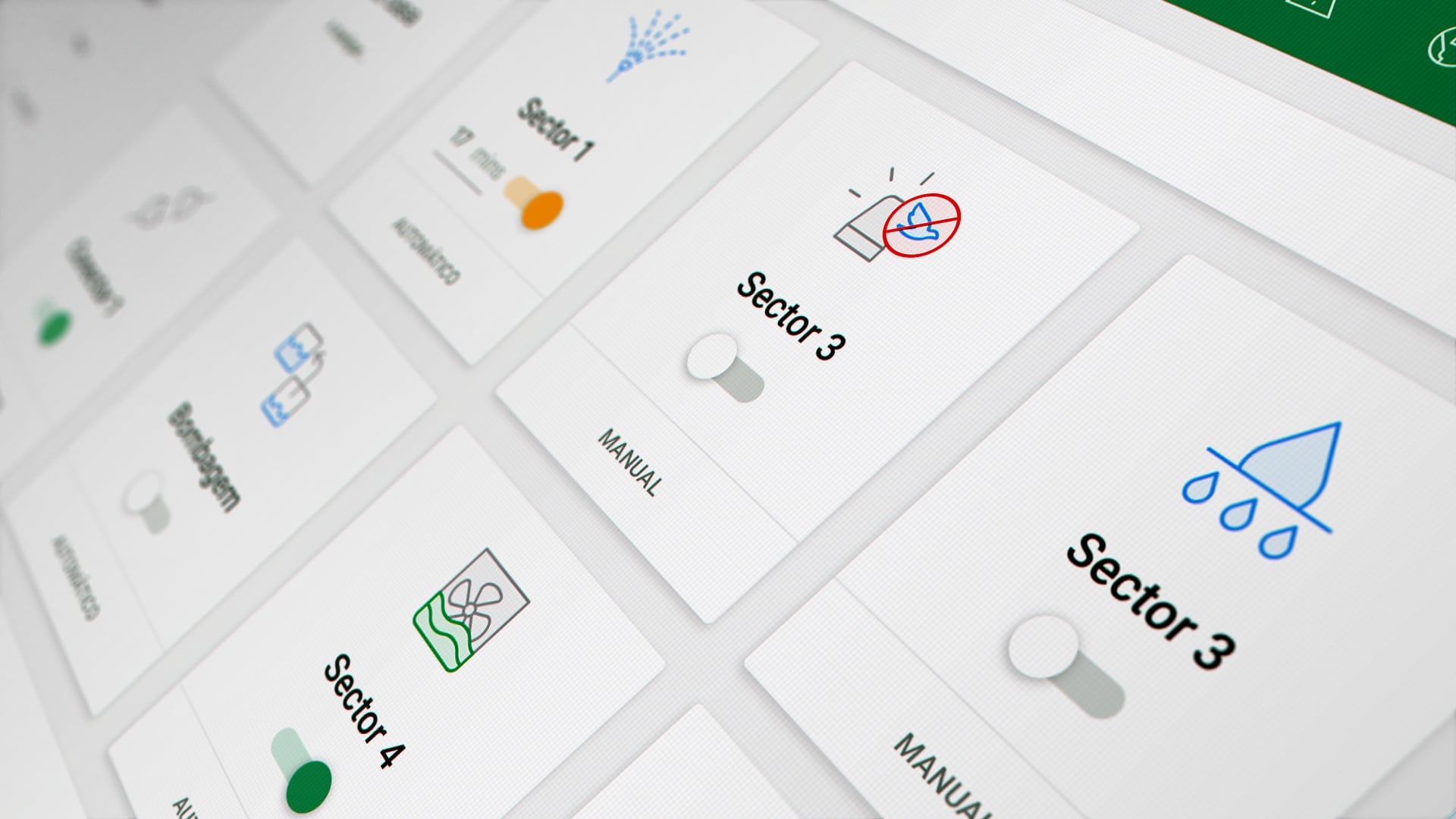
Close-up of digital control panel showing irrigation settings, timers, and switches.

Nutritional analysis

Turning soil data into crop decisions

Soil testing reveals nutrient levels but doesn't tell farmers what to apply or when. The system translates lab results into parcel-specific plans by crop type and growth stage. Applying the same data components from weather and monitoring made agronomic data immediately familiar to platform users.

Mobile Engineering

Waterdog
Mobile app interface with heart logo, products for sale, and CPR course offerings.
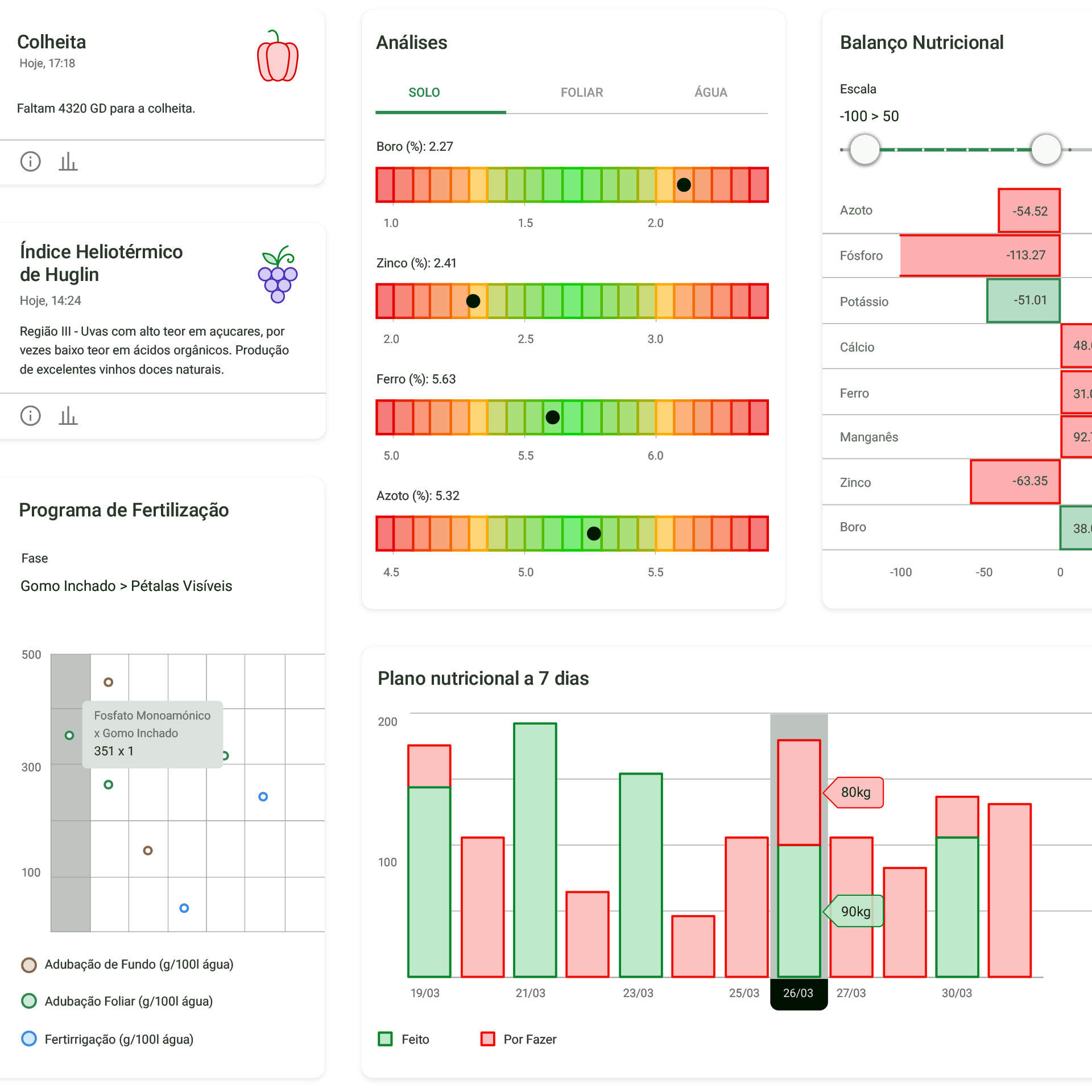
Agricultural data showing crop analysis, fertilization plan, and nutritional balance.
Three icons: green olives, corn, and red cherries with green leaves.
Icons with multiple fruits.
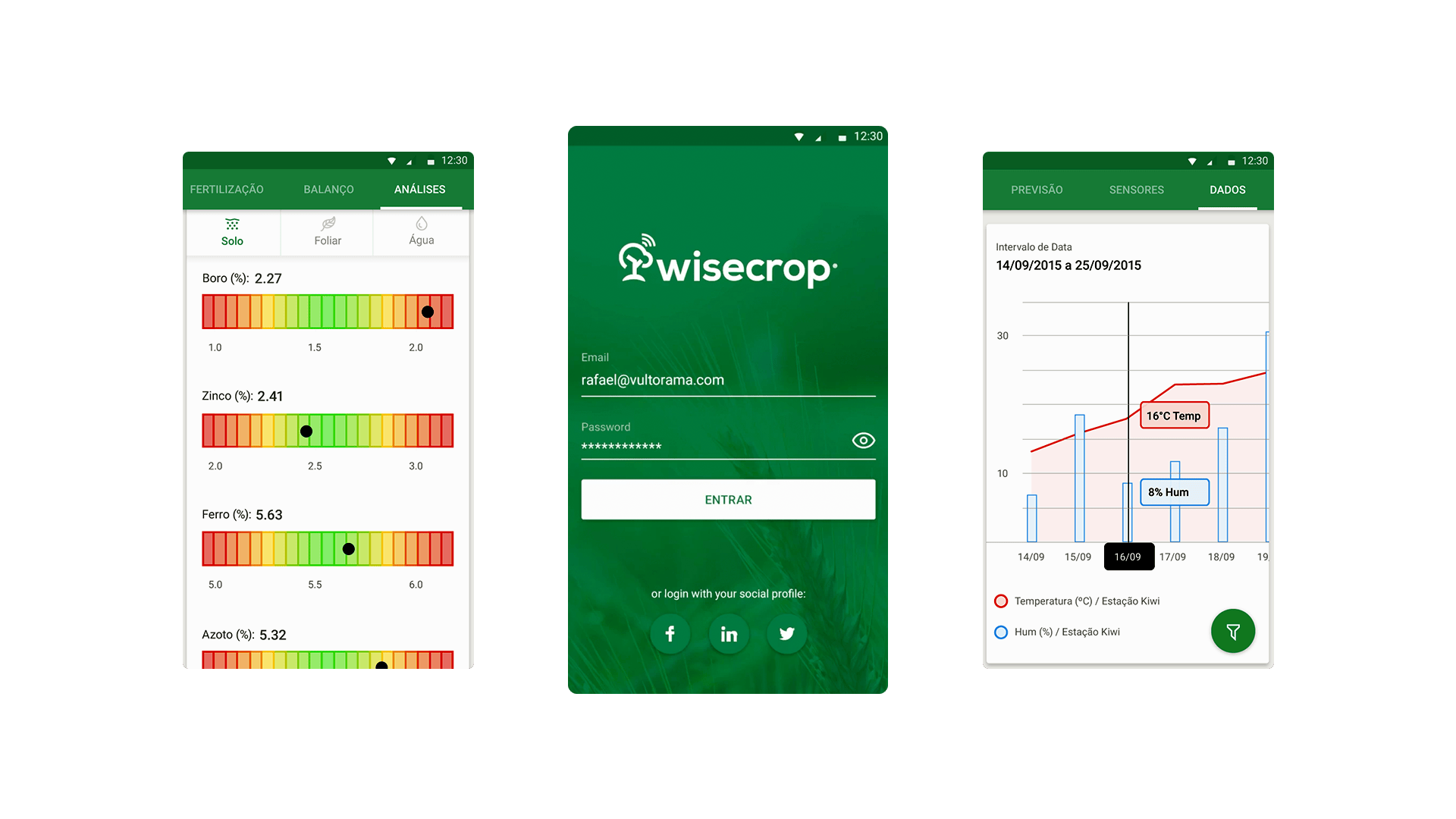
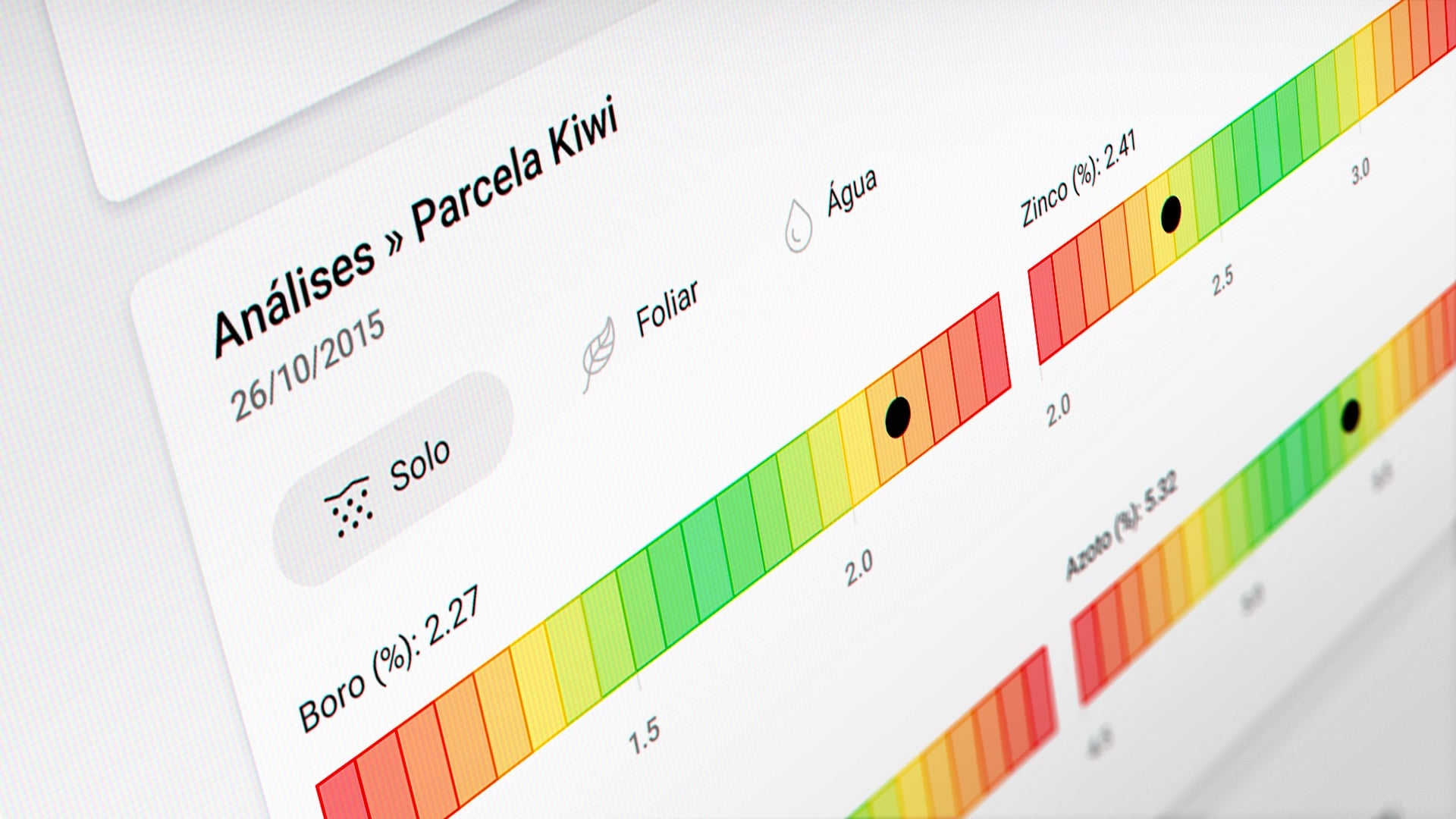
Data analysis interface showing soil nutrients (Boron, Zinc, Nitrogen) for Kiwi parcel.
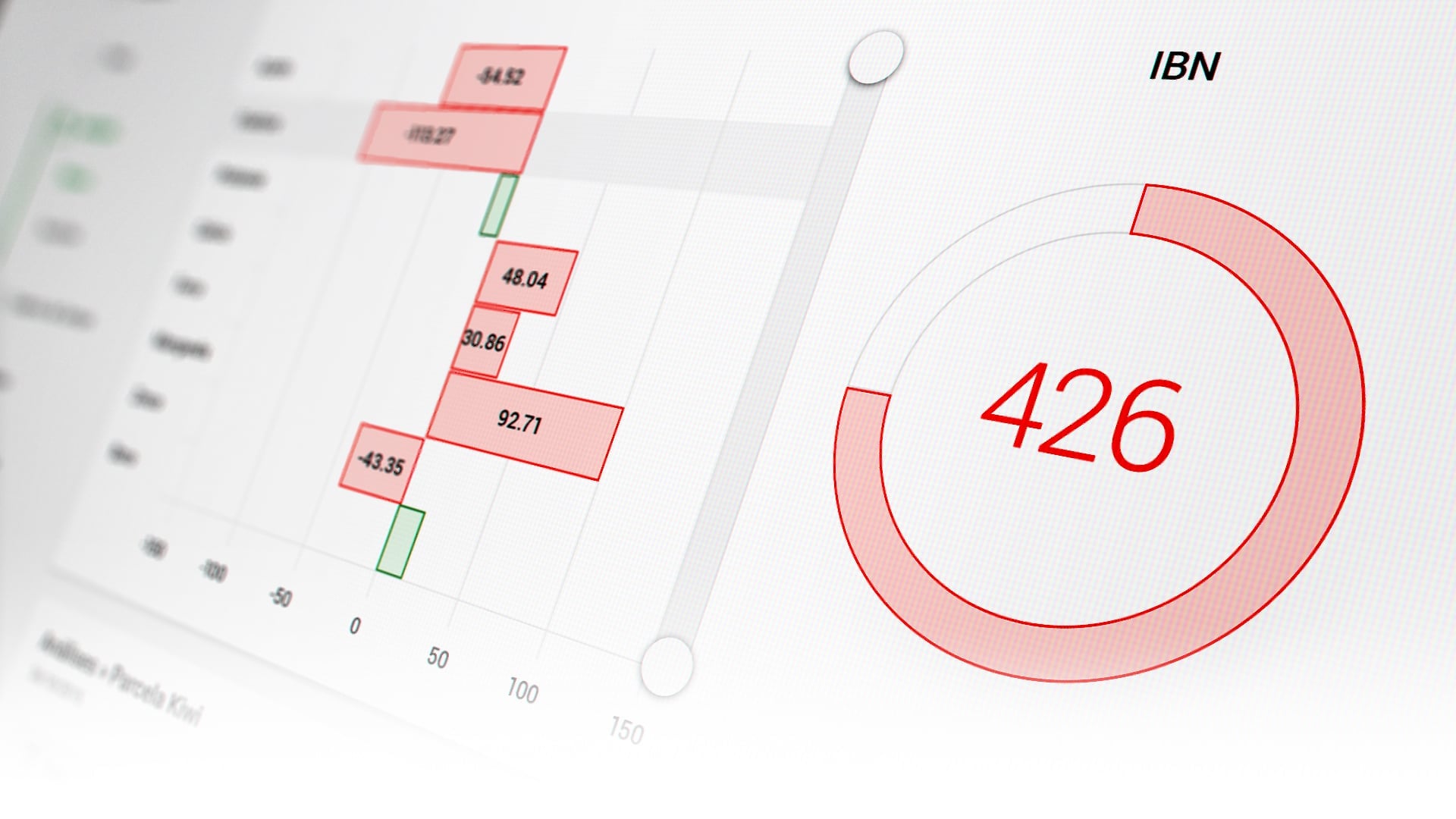
Data visualization with a bar graph and a circular gauge displaying a metric.

Results

One platform built for every farm application

The modular architecture unified individual applications into a single operating system, now running across thousands of companies and hundreds of crop types. Each new application builds on what came before, compounding the platform's reach without adding operational complexity.

Mountains icon.

90K+

hectares digitalized

Building icon.

6K+

active farm companies

Plant icon

280+

crops in production

Built close to the farmer

Field demonstrations and trade shows keep Wisecrop grounded in real operational problems, not assumed ones.

We realized success when farmers stopped calling it software and started calling it their farm system.

Micaela Monteiro profile picture.

Tiago Sá

Co-Founder and CEO at Wisecrop

Wisecrop proves that even the most ambitious farm operations don't need to choose between simplicity and precision. Built on a scalable component system, the Agricultural Operating System grows without rebuilding from scratch, in a sector where most platforms still can't keep up.

Wisecrop

Scattered farm tools rebuilt into one operating system

Modular Architecture

Product UX

Agriculture

Farm operations run on scattered tools and gut instinct, and Wisecrop is changing that. This agtech company is developing the Agricultural Operating System for ambitious farm operations across weather, irrigation, nutrition, and field management. Getting those tools to behave as one system demands consistency agriculture rarely achieves.

1

Replace scattered tools with one platform farmers trust

2

Reach every crop type, farm size, and growing region

3

Expand the platform without slowing down or rebuilding

Weather prediction

Knowing the field before conditions change

Weather patterns determine planting windows, spray schedules, and harvest timing, but regional forecasts miss field-level variations. AI forecasting combined with on-site sensors delivers parcel-specific predictions. Visualization components built here established reusable patterns across the platform.

Product Engineering

Wisecrop

Weather app interface showing current conditions, weekly forecast, and "Parcela Kiwi."
Three weather icons: sun behind cloud, single cloud, and sun partially obscured by cloud.
Icons depicting weather conditions: sunny, cloudy, rainy, and snowy, in a grid format.
Four smartphone screens showing the WiseCrop app with weather data, maps, and graphs.
Close-up of a weather station interface showing temperature, humidity, sunlight, and rain.
A graph showing humidity in yellow, temperature in magenta, and precipitation in blue.

Monitoring and control

Controlling the farm without leaving the phone

Manual irrigation requires field walks to adjust valves and check conditions. Sensors connect to mobile controls, letting farmers adjust irrigation, activate equipment, and automate lighting. Control components developed here became the shared interaction pattern across every hardware feature.

Mobile Engineering

Waterdog

Image Placeholder background video
Dashboard displaying environmental data, including temperature, humidity, and irrigation controls.
Illustration showing wind, solar panels, and a water turbine generating clean energy.
Icons depicting monitoring actions and sensors.
Watering schedule interface for tomatoes with timers, sectors, and duration options.
Close-up of digital control panel showing irrigation settings, timers, and switches.

Nutritional analysis

Turning soil data into crop decisions

Soil testing reveals nutrient levels but doesn't tell farmers what to apply or when. The system translates lab results into parcel-specific plans by crop type and growth stage. Applying the same data components from weather and monitoring made agronomic data immediately familiar to platform users.

Mobile Engineering

Waterdog

Image Placeholder background video
Agricultural data showing crop analysis, fertilization plan, and nutritional balance.
Three icons: green olives, corn, and red cherries with green leaves.
Icons with multiple fruits.
Data analysis interface showing soil nutrients (Boron, Zinc, Nitrogen) for Kiwi parcel.
Data visualization with a bar graph and a circular gauge displaying a metric.

Results

One platform built for every farm application

The modular architecture unified individual applications into a single operating system, now running across thousands of companies and hundreds of crop types. Each new application builds on what came before, compounding the platform's reach without adding operational complexity.

Mountains icon.

90K+

hectares digitalized

Building icon.

6K+

active farm companies

Plant icon

280+

crops in production

Built close to the farmer

Field demonstrations and trade shows keep Wisecrop grounded in real operational problems, not assumed ones.

We realized success when farmers stopped calling it software and started calling it their farm system.

Micaela Monteiro profile picture.

Tiago Sá

Co-Founder and CEO at Wisecrop

Wisecrop proves that even the most ambitious farm operations don't need to choose between simplicity and precision. Built on a scalable component system, the Agricultural Operating System grows without rebuilding from scratch, in a sector where most platforms still can't keep up.

Wisecrop

Scattered farm tools rebuilt into one operating system

Modular Architecture

Product UX

Agriculture

Farm operations run on scattered tools and gut instinct, and Wisecrop is changing that. This agtech company is developing the Agricultural Operating System for ambitious farm operations across weather, irrigation, nutrition, and field management. Getting those tools to behave as one system demands consistency agriculture rarely achieves.

1

Replace scattered tools with one platform farmers trust

2

Reach every crop type, farm size, and growing region

3

Expand the platform without slowing down or rebuilding

Weather prediction

Knowing the field before conditions change

Weather patterns determine planting windows, spray schedules, and harvest timing, but regional forecasts miss field-level variations. AI forecasting combined with on-site sensors delivers parcel-specific predictions. Visualization components built here established reusable patterns across the platform.

Product Engineering

Wisecrop

Weather app interface showing current conditions, weekly forecast, and "Parcela Kiwi."
Three weather icons: sun behind cloud, single cloud, and sun partially obscured by cloud.
Icons depicting weather conditions: sunny, cloudy, rainy, and snowy, in a grid format.
Four smartphone screens showing the WiseCrop app with weather data, maps, and graphs.
Close-up of a weather station interface showing temperature, humidity, sunlight, and rain.
A graph showing humidity in yellow, temperature in magenta, and precipitation in blue.

Monitoring and control

Controlling the farm without leaving the phone

Manual irrigation requires field walks to adjust valves and check conditions. Sensors connect to mobile controls, letting farmers adjust irrigation, activate equipment, and automate lighting. Control components developed here became the shared interaction pattern across every hardware feature.

Mobile Engineering

Waterdog

Mobile app interface with heart logo, products for sale, and CPR course offerings.
Dashboard displaying environmental data, including temperature, humidity, and irrigation controls.
Illustration showing wind, solar panels, and a water turbine generating clean energy.
Icons depicting monitoring actions and sensors.
Watering schedule interface for tomatoes with timers, sectors, and duration options.
Close-up of digital control panel showing irrigation settings, timers, and switches.

Nutritional analysis

Turning soil data into crop decisions

Soil testing reveals nutrient levels but doesn't tell farmers what to apply or when. The system translates lab results into parcel-specific plans by crop type and growth stage. Applying the same data components from weather and monitoring made agronomic data immediately familiar to platform users.

Mobile Engineering

Waterdog

Mobile app interface with heart logo, products for sale, and CPR course offerings.
Agricultural data showing crop analysis, fertilization plan, and nutritional balance.
Three icons: green olives, corn, and red cherries with green leaves.
Icons with multiple fruits.
Data analysis interface showing soil nutrients (Boron, Zinc, Nitrogen) for Kiwi parcel.
Data visualization with a bar graph and a circular gauge displaying a metric.

Results

One platform built for every farm application

The modular architecture unified individual applications into a single operating system, now running across thousands of companies and hundreds of crop types. Each new application builds on what came before, compounding the platform's reach without adding operational complexity.

Mountains icon.

90K+

hectares digitalized

Building icon.

6K+

active farm companies

Plant icon

280+

crops in production

Built close to the farmer

Field demonstrations and trade shows keep Wisecrop grounded in real operational problems, not assumed ones.

We realized success when farmers stopped calling it software and started calling it their farm system.

Micaela Monteiro profile picture.

Tiago Sá

Co-Founder and CEO at Wisecrop

Wisecrop proves that even the most ambitious farm operations don't need to choose between simplicity and precision. Built on a scalable component system, the Agricultural Operating System grows without rebuilding from scratch, in a sector where most platforms still can't keep up.

Wisecrop

Scattered farm tools rebuilt into one operating system

Modular Architecture

Product UX

Agriculture

Farm operations run on scattered tools and gut instinct, and Wisecrop is changing that. This agtech company is developing the Agricultural Operating System for ambitious farm operations across weather, irrigation, nutrition, and field management. Getting those tools to behave as one system demands consistency agriculture rarely achieves.

1

Replace scattered tools with one platform farmers trust

2

Reach every crop type, farm size, and growing region

3

Expand the platform without slowing down or rebuilding

Weather prediction

Knowing the field before conditions change

Weather patterns determine planting windows, spray schedules, and harvest timing, but regional forecasts miss field-level variations. AI forecasting combined with on-site sensors delivers parcel-specific predictions. Visualization components built here established reusable patterns across the platform.

Product Engineering

Wisecrop

Weather app interface showing current conditions, weekly forecast, and "Parcela Kiwi."
Three weather icons: sun behind cloud, single cloud, and sun partially obscured by cloud.
Icons depicting weather conditions: sunny, cloudy, rainy, and snowy, in a grid format.
Four smartphone screens showing the WiseCrop app with weather data, maps, and graphs.
Close-up of a weather station interface showing temperature, humidity, sunlight, and rain.
A graph showing humidity in yellow, temperature in magenta, and precipitation in blue.

Monitoring and control

Controlling the farm without leaving the phone

Manual irrigation requires field walks to adjust valves and check conditions. Sensors connect to mobile controls, letting farmers adjust irrigation, activate equipment, and automate lighting. Control components developed here became the shared interaction pattern across every hardware feature.

Mobile Engineering

Waterdog

Mobile app interface with monitoring and programmable features.
Dashboard displaying environmental data, including temperature, humidity, and irrigation controls.
Illustration showing wind, solar panels, and a water turbine generating clean energy.
Icons depicting monitoring actions and sensors.
Watering schedule interface for tomatoes with timers, sectors, and duration options.
Close-up of digital control panel showing irrigation settings, timers, and switches.

Nutritional analysis

Turning soil data into crop decisions

Soil testing reveals nutrient levels but doesn't tell farmers what to apply or when. The system translates lab results into parcel-specific plans by crop type and growth stage. Applying the same data components from weather and monitoring made agronomic data immediately familiar to platform users.

Mobile Engineering

Waterdog

Mobile app interface with analytics screens, temperature and humidity.
Agricultural data showing crop analysis, fertilization plan, and nutritional balance.
Three icons: green olives, corn, and red cherries with green leaves.
Icons with multiple fruits.
Data analysis interface showing soil nutrients (Boron, Zinc, Nitrogen) for Kiwi parcel.
Data visualization with a bar graph and a circular gauge displaying a metric.

Results

One platform built for every farm application

The modular architecture unified individual applications into a single operating system, now running across thousands of companies and hundreds of crop types. Each new application builds on what came before, compounding the platform's reach without adding operational complexity.

Mountains icon.

90K+

hectares digitalized

Building icon.

6K+

active farm companies

Plant icon

280+

crops in production

Built close to the farmer

Field demonstrations and trade shows keep Wisecrop grounded in real operational problems, not assumed ones.

We realized success when farmers stopped calling it software and started calling it their farm system.

Renato Braz profile picture.

Tiago Sá

Co-Founder and CEO at Wisecrop

Wisecrop proves that even the most ambitious farm operations don't need to choose between simplicity and precision. Built on a scalable component system, the Agricultural Operating System grows without rebuilding from scratch, in a sector where most platforms still can't keep up.